
James 1: Load-Bearing Faith
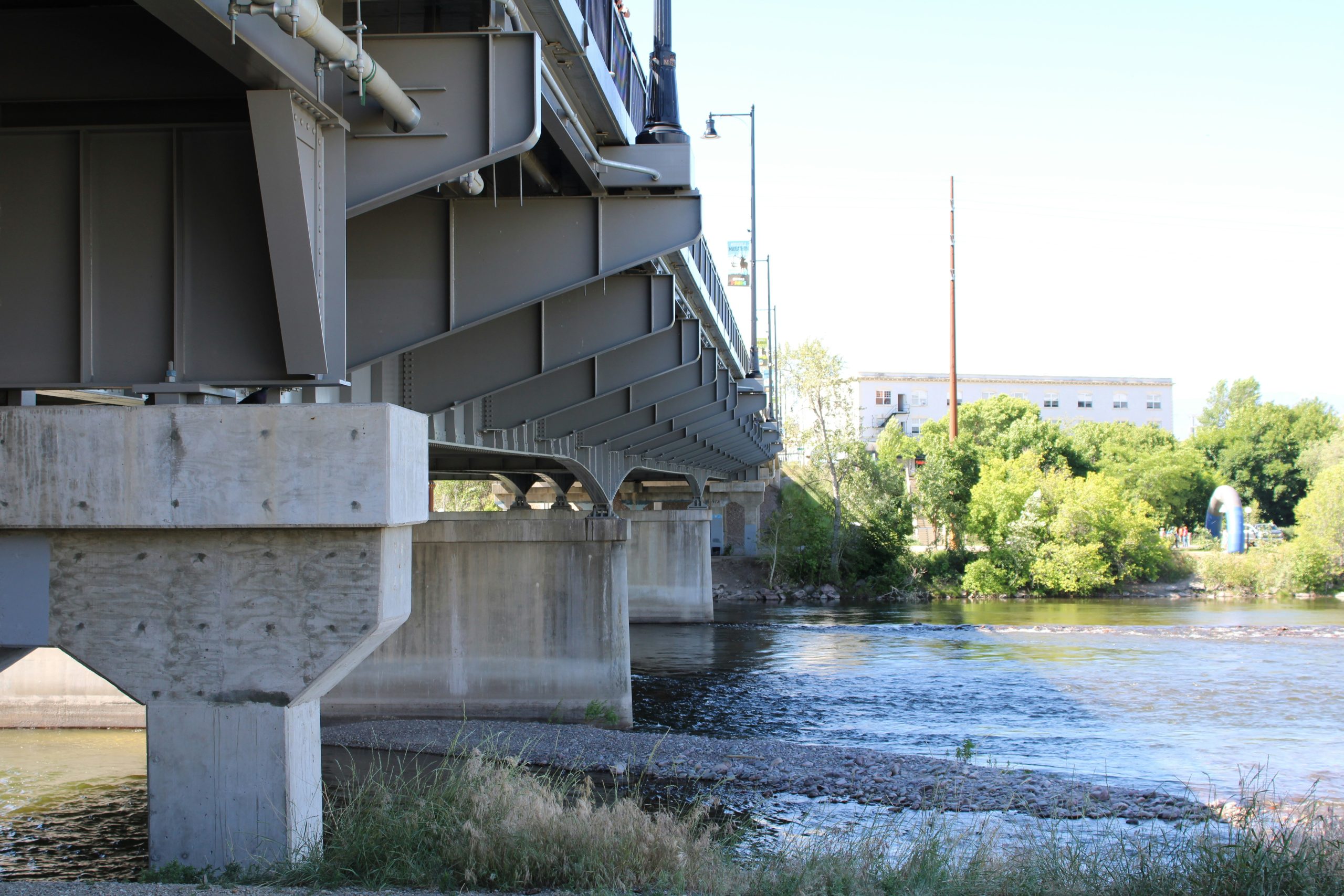
A few years ago I stood on site watching a concrete beam get load-tested before we would sign off on it. You stack weight onto a structure in careful increments, well beyond anything it will ever carry in real life, and you watch. You are not hoping it breaks. You are proving that it will not. A beam that has never been tested is a beam nobody can trust, no matter how good it looks on the drawings.
James opens his letter with exactly that logic applied to a human life. Not because he wants to see us fail, but because he knows that untested faith is an unknown quantity, to us if not to God. This chapter is his introduction to that idea, and it goes further than I expected the first time I sat down and actually worked through it slowly.
A letter to the scattered
James, a servant of God and of the Lord Jesus Christ, writes to the twelve tribes scattered abroad. This is almost certainly James the brother of Jesus, a man who grew up in the same house and did not believe his brother was the Messiah until after the resurrection. That detail matters. He is not a distant theologian. He watched Jesus wash dishes, being a carpenter, and he still calls himself a servant rather than a brother. The people he writes to have lost their homes, scattered by persecution, and he does not open with sympathy. He opens with joy.
Why trials are the point, not the interruption
Count it all joy, my brothers, when you meet trials of various kinds, for you know that the testing of your faith produces steadfastness (James 1:2-3). Notice what he does not say. He does not say trials are good in themselves, or that you should enjoy the pain. He says the testing produces something, the way load-testing produces certainty about a beam. You cannot shortcut it. A structure that has only ever been calculated on paper is not yet a structure you can trust with lives. Faith that has only ever been declared, never pressured, is the same.
Let steadfastness have its full effect, that you may be perfect and complete, lacking in nothing (1:4). Full effect. Not cut short by a shortcut, not rescued halfway through, not medicated into numbness. James is asking his scattered readers to let the pressure do its work rather than escape it. That is a hard word to a man who spends his working life trying to remove risk and pressure from structures. But faith is not a beam. It is not supposed to be protected from load. It is supposed to be proven by it.
Ask, and mean it
If any of you lacks wisdom, let him ask God, who gives generously to all without reproach (1:5). This is the promise I return to most, because working out what a trial is even for, in the moment, is often the hardest part. James does not say God gives wisdom to the deserving. He says God gives it generously, to anyone who asks, without making them feel small for needing it. The catch is verse 6: ask in faith, with no doubting. Not because doubt disqualifies you from God’s presence, but because a mind that will not settle on anything cannot receive anything either. He compares it to a wave, tossed by the wind. You cannot build on a wave.
A reversal that still unsettles me
James turns next to status. Let the lowly brother boast in his exaltation, and the rich in his humiliation (1:9-10). Two men, opposite positions, told to boast in the opposite of what they currently have. The poor man should see his standing before God, not his bank balance. The rich man should remember that like a flower in the grass, his wealth will fade, often faster than he expects. I read this as someone who has spent a career around budgets, quotes, and the pecking order that money quietly creates on a site. James is not condemning wealth. He is refusing to let it be the measure of anything that actually lasts.
Temptation is not God’s doing
James is careful here to close a door people are tempted to walk through. Let no one say, when he is tempted, I am being tempted by God (1:13). Trials come from outside us, and God can use them. Temptation is different. It rises from our own desire, which lures and entices us, and when desire has conceived it gives birth to sin, and sin, when it is fully grown, brings forth death (1:14-15). That is a straight line, laid out like a construction sequence: desire, conception, birth, growth, death. Nobody wakes up and commits the final failure out of nowhere. It was under construction the whole time. Every good and perfect gift is from above, James adds (1:17), which is the deliberate contrast. God is not the source of what destroys us. He is the source of every good thing we actually have.
The mirror you walk away from
Be quick to hear, slow to speak, slow to anger, James writes, then be doers of the word, and not hearers only, deceiving yourselves (1:19,22). His illustration is a man who looks in a mirror, sees exactly what needs fixing, and walks away and immediately forgets what he looked like (1:23-24). I have caught myself doing the theological version of this more times than I would like to admit: reading a passage, feeling the conviction land, nodding, and carrying on completely unchanged an hour later. James calls the alternative the perfect law, the law of liberty, and says the one who looks into it and perseveres, being no hearer who forgets but a doer who acts, will be blessed in his doing (1:25).
What the finished structure looks like
James closes the chapter with a definition that is almost jarringly practical. Religion that is pure and undefiled before God is this: to visit orphans and widows in their affliction, and to keep oneself unstained from the world (1:27). Not a feeling. Not a Sunday habit. Two things: care for the people with no one to advocate for them, and a life that has not been shaped by the world’s priorities. After a chapter about trials, wisdom, wealth, temptation and the word, James lands the whole thing on your hands and your feet. What did you do about it.
That beam I mentioned held. It always does, if the design and the materials were sound to begin with. The test does not create the strength. It reveals it. James 1 is telling scattered, pressured people the same thing about their faith, and it is telling us. The trial you are under right now is not evidence that something has gone wrong. It may be the proof that something was built to last.
Where in your life right now is the pressure asking you to be a doer, not just a hearer?